

What your boiler pressure should be in California
A local pro who services boilers gets in touch about the tune-up.
Find my proA cold boiler should read between 12 and 15 psi on the gauge. Once it heats up and the water expands, that number climbs, and anywhere up to about 20 psi while running is normal. If the needle sits below 12 when the system is cold, there's not enough water in the loop and it needs topping up through the feed valve. If it sits above 30, the pressure relief valve may open and let water out on its own, which is the system protecting itself from damage. A boiler that keeps losing pressure between fillings usually has a leak somewhere in the loop, even a small one, and that's worth checking before it gets worse. Keeping the pressure in range matters most for how evenly your home heats through the colder months and how hard the boiler has to work to do it.




Why does your gauge keep moving
You check the gauge and it is not where it was last week. Maybe it is creeping past 20 even when the system is cold, or maybe it keeps sliding back down no matter how many times you bleed a radiator. A boiler that loses pressure on its own usually has a leak somewhere in the loop, even a small one you cannot see. A boiler that runs too high stresses the relief valve until it starts weeping water, which is often the first sign an owner notices. Left alone, either pattern wears on the system and can mean a radiator that stays cold while the rest of the house heats fine.

Cold water enters and the feed valve stops flow at 12 psi.
Heat raises water temperature and pressure climbs as it expands.
The expansion tank absorbs that extra volume so pressure levels off.
Pressure settles near 20 psi while the boiler keeps running.
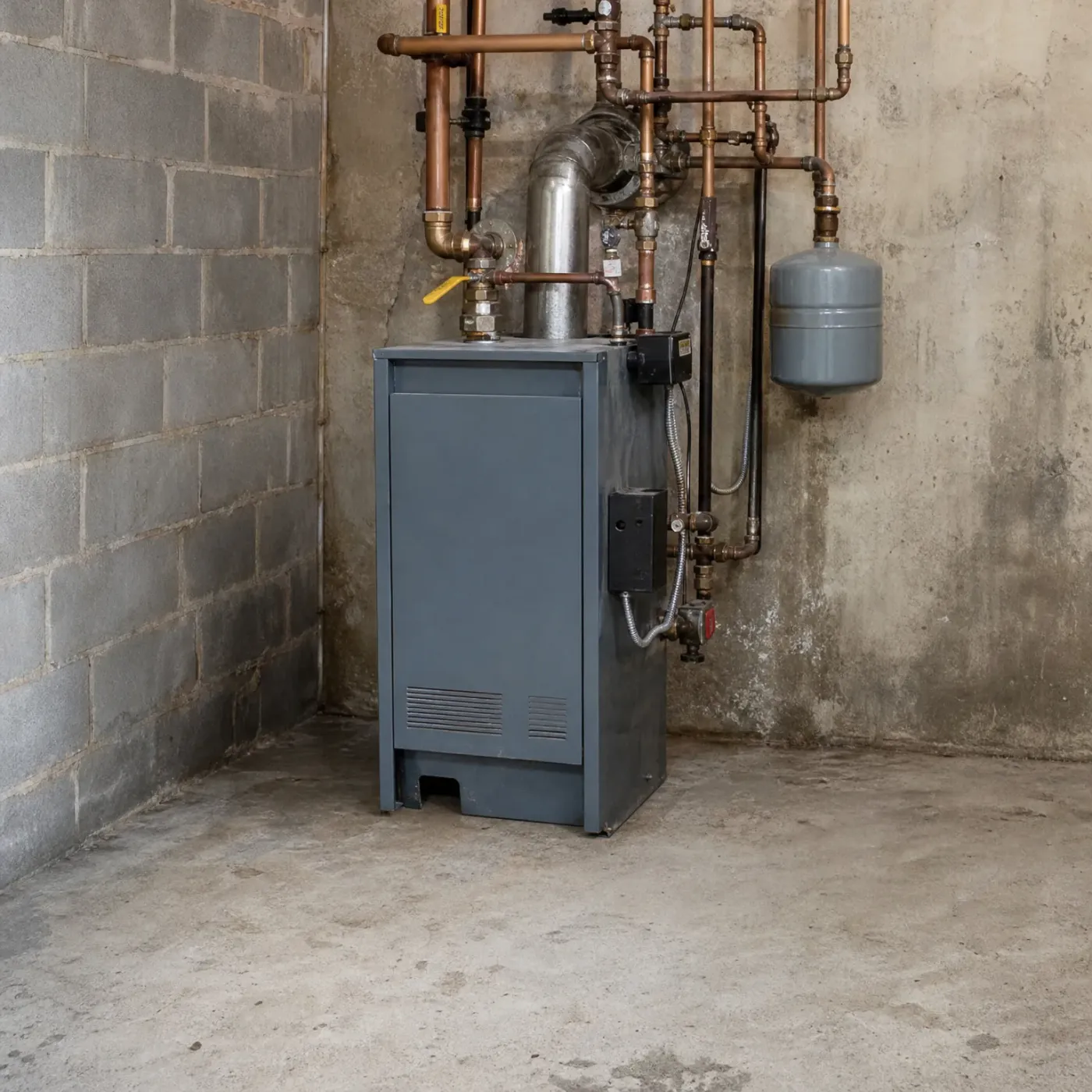
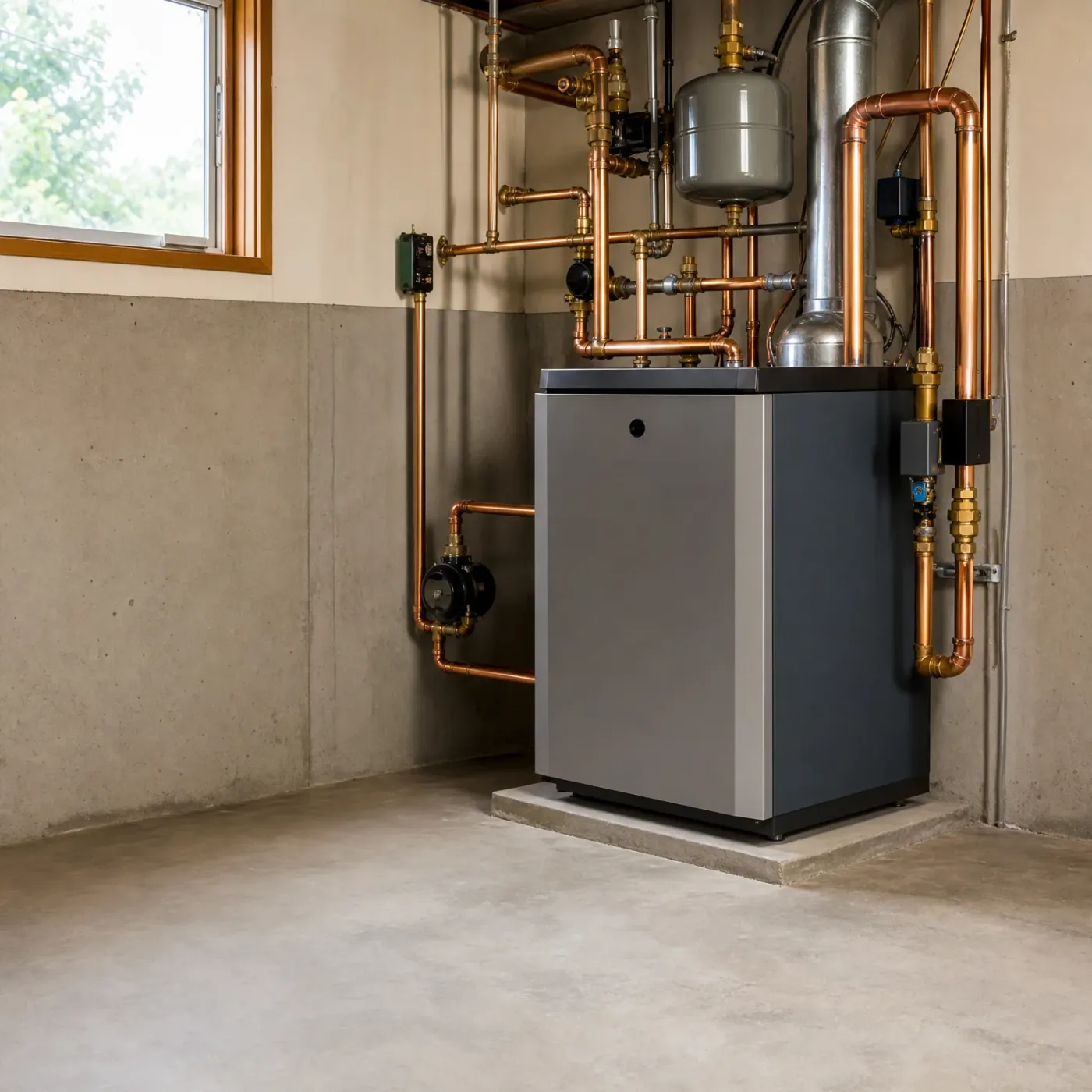
The gauge only tells you the result. Behind it are a few parts doing the actual work. If pressure climbs too high, the relief valve opens near 30 psi and lets water out, which is the system protecting itself, not malfunctioning. On the low side, some boilers have an autofeed valve that quietly tops up water on its own whenever pressure drops. Others don't, and rely on a manual fill valve instead, which means nobody's coming to fix a low reading but you. Then there's the expansion tank, which holds a diaphragm that keeps air and water apart so the tank can absorb pressure as water heats and expands. When that diaphragm fails, the tank floods and loses its air cushion, and pressure jumps with every cycle instead of settling where it should. A gauge that won't hold still is usually one of these parts telling you something, not the gauge itself being wrong. Knowing which part is behind the number is the difference between bleeding a radiator for the tenth time and actually fixing it.
The parts behind the number
- The pressure relief valve opens automatically near 30 psi to protect the boiler from a dangerous buildup.
- A pressure relief valve that discharges water is responding to pressure that already passed a safe limit, not causing one.
- The autofeed valve, where one is installed, adds water to bring a low system back toward 12 psi on its own.
- A system with no autofeed relies on a manual fill valve, so pressure stays low until someone opens it by hand.
- The diaphragm inside the expansion tank separates air from water and lets the tank absorb pressure changes without flooding.
- A waterlogged expansion tank has lost its air cushion, so pressure spikes with every heating cycle instead of leveling off.
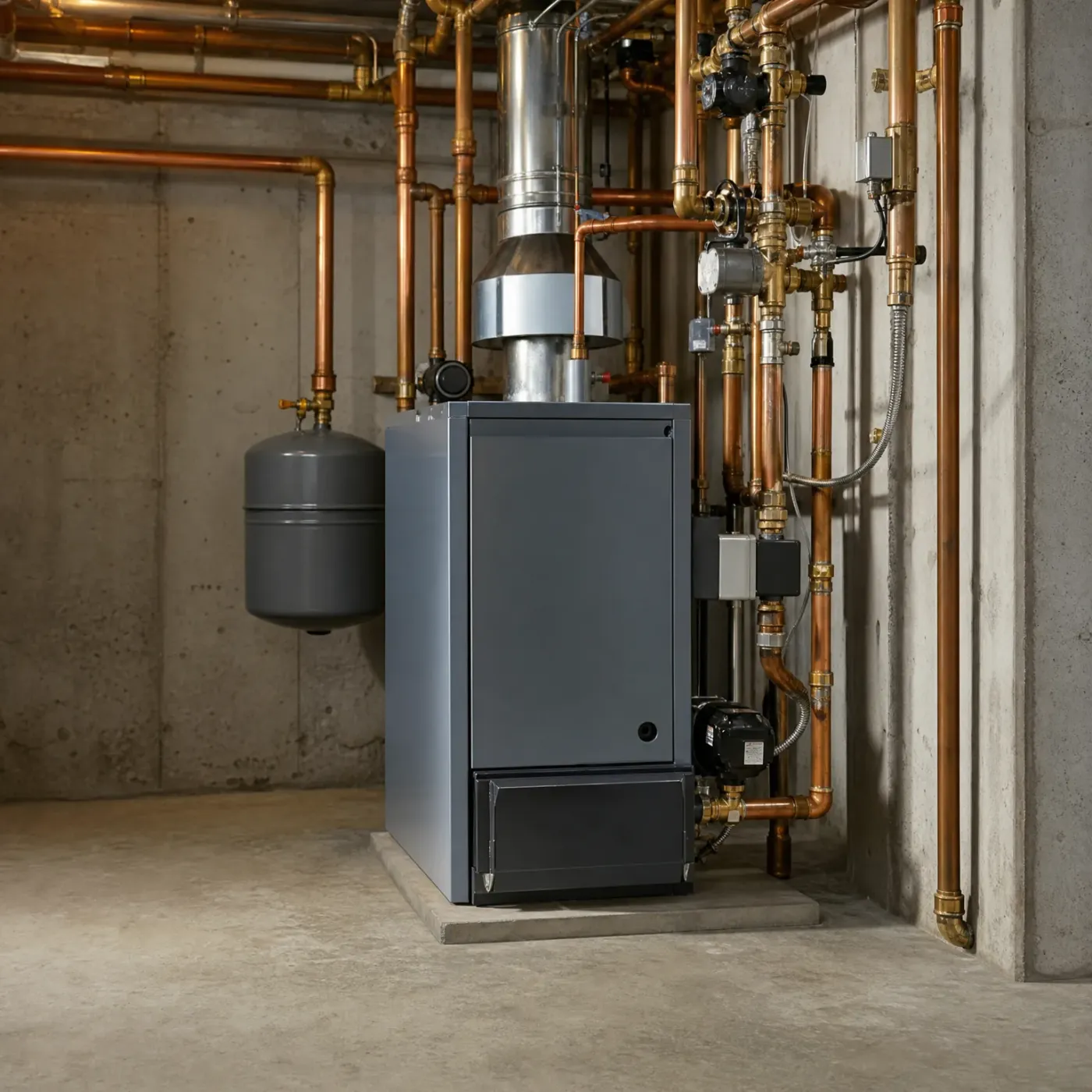
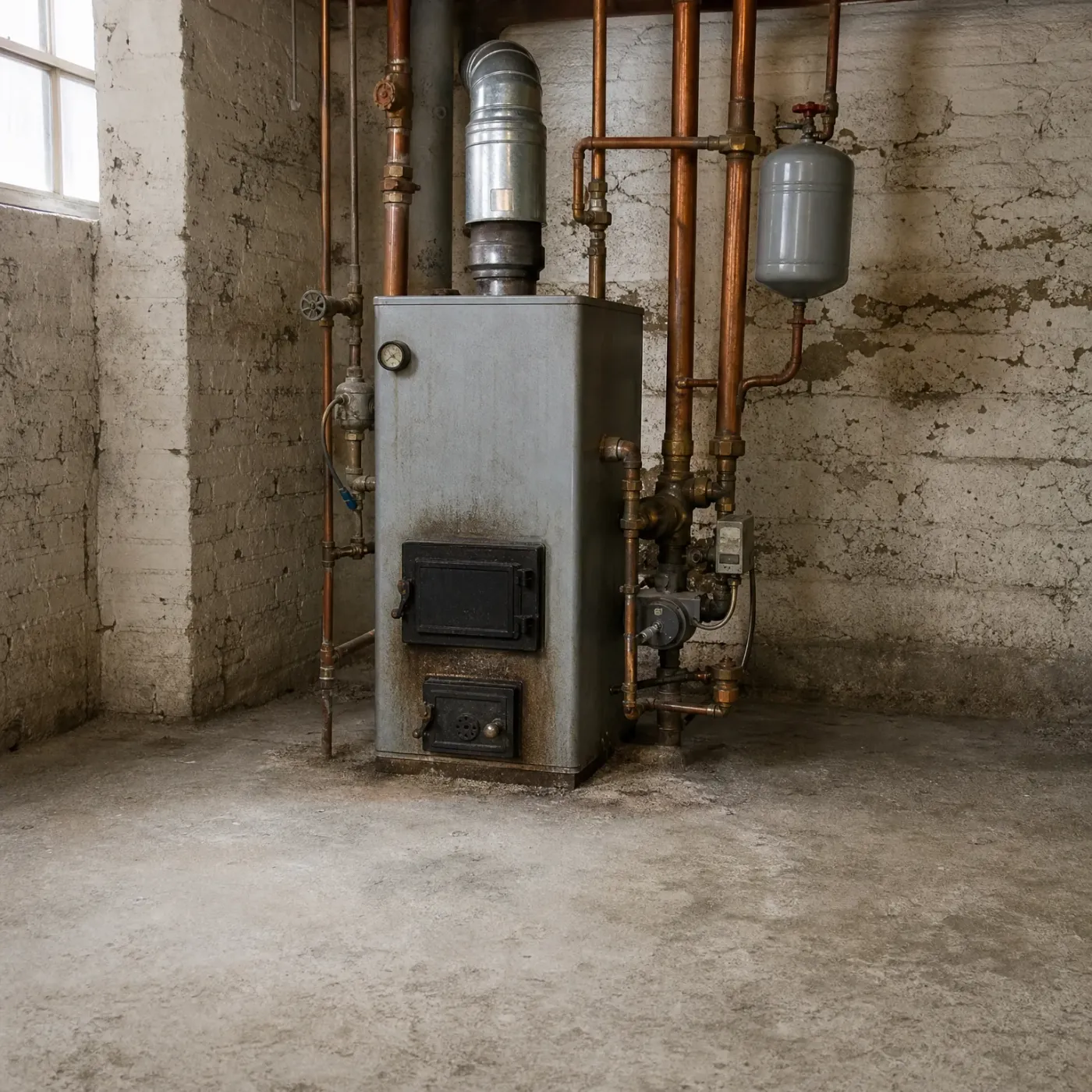
Winter nights average 40°F statewide
Nights in the 40s don't push a boiler hard, but your system still idles through plenty of them from December through February. Each cycle is a chance for pressure to drift, so a cold gauge reading worth trusting matters more over a long winter than a short one.
NOAA nClimDiv 1991-2020 county normals weighted by homes


The right pro for this job
You can keep checking that gauge yourself, bleeding a radiator when it creeps up, topping off water when it drops, and guessing whether a reading means something or nothing. Or you can have someone who does this for a living look at the whole system once and tell you what's actually going on. Finding that person usually means searching around, calling a few numbers, explaining the same gauge reading three times, then sitting on quotes trying to work out who's worth it. None of that gets your boiler running any better. A technician who checks pressure as part of regular maintenance also catches the feed valve that's sticking or the expansion tank that's waterlogged, the things that turn a normal winter into a string of callbacks. Your boiler still has to get through December to February either way. Handing off the search is the part you don't have to do yourself.
Where your gauge should sit
- Cold, your gauge should sit between 12 and 15 psi, and up to about 20 psi while the boiler runs is normal.
- A reading that drifts outside that range points to a specific cause, whether it's a failing expansion tank, a leak, or a feed valve out of adjustment.
- Checking the gauge tells you something is off, but it does not tell you which part needs attention.
- A system that holds 12 to 15 psi cold with clean, dry fittings is working the way it should through a long winter of cycling.
- Instead of calling several contractors, explaining the same gauge readings each time, and sorting through quotes, you can be matched with someone who services boilers in your area.
- That contractor can look at the whole system once, rather than you guessing at each reading on your own all winter.
The number on the gauge is the whole answer, and now you have it. Cold, it should read 12 to 15 psi. Running, up to about 20 psi is normal, because the water has expanded and the system is built to allow for that. Below 12 cold means the system is short on water. Above 15 cold, or well past 20 running, means something is pushing pressure higher than it should go, whether that's a feed valve stuck open or an expansion tank that's stopped doing its job. The gauge tells you one of those situations exists. It does not tell you which part is behind it, and that's where a reading alone runs out of use.
A boiler that holds 12 to 15 psi cold, with no rust at the fittings and no corrosion on the shell, is doing what it's supposed to do through a California winter of nights in the 40s and months of cycling on and off. That's the standard to check against every time you look.
If your gauge is outside that range, the next step is someone who can trace the reading back to its cause instead of you watching it week to week and guessing. Rather than calling around, repeating the same numbers to each contractor, and weighing quotes against each other, you can be matched with someone who services boilers in your area and let them take it from there.

Boiler Maintenance
Matched to your boiler job

- Describe your boiler job, and a local pro who handles it gets in touch.

- Send the form, and lining up the boiler tune-up stops being yours to chase.
- After this form, you can stop searching for a boiler pro.

- Skip calling around to set up a boiler tune-up.
- One form instead of hunting for a pro who does boiler tune-ups.

- A licensed local pro takes the request for your boiler tune-up.
- Your request stays with one local pro.