Why your boiler is leaking water in California

Step 1 of 3: Equipment

A leaking boiler usually means a failed pressure relief valve, a cracked heat exchanger, or loose fittings on the pipes feeding it. The pressure relief valve is the most common culprit. It opens on purpose when pressure inside the system climbs too high, and water drips out near the base of the unit. Corrosion at pipe joints is the other frequent cause, especially where fittings have been disturbed or never sealed quite right. A cracked heat exchanger is less common but more serious, since it means the tank itself is failing rather than a part attached to it. Since most homes here heat with gas, a boiler is often the main source of heat through the cooler months, so a slow leak now is worth catching before it becomes a bigger repair or a system that won't hold pressure at all when you need it most.

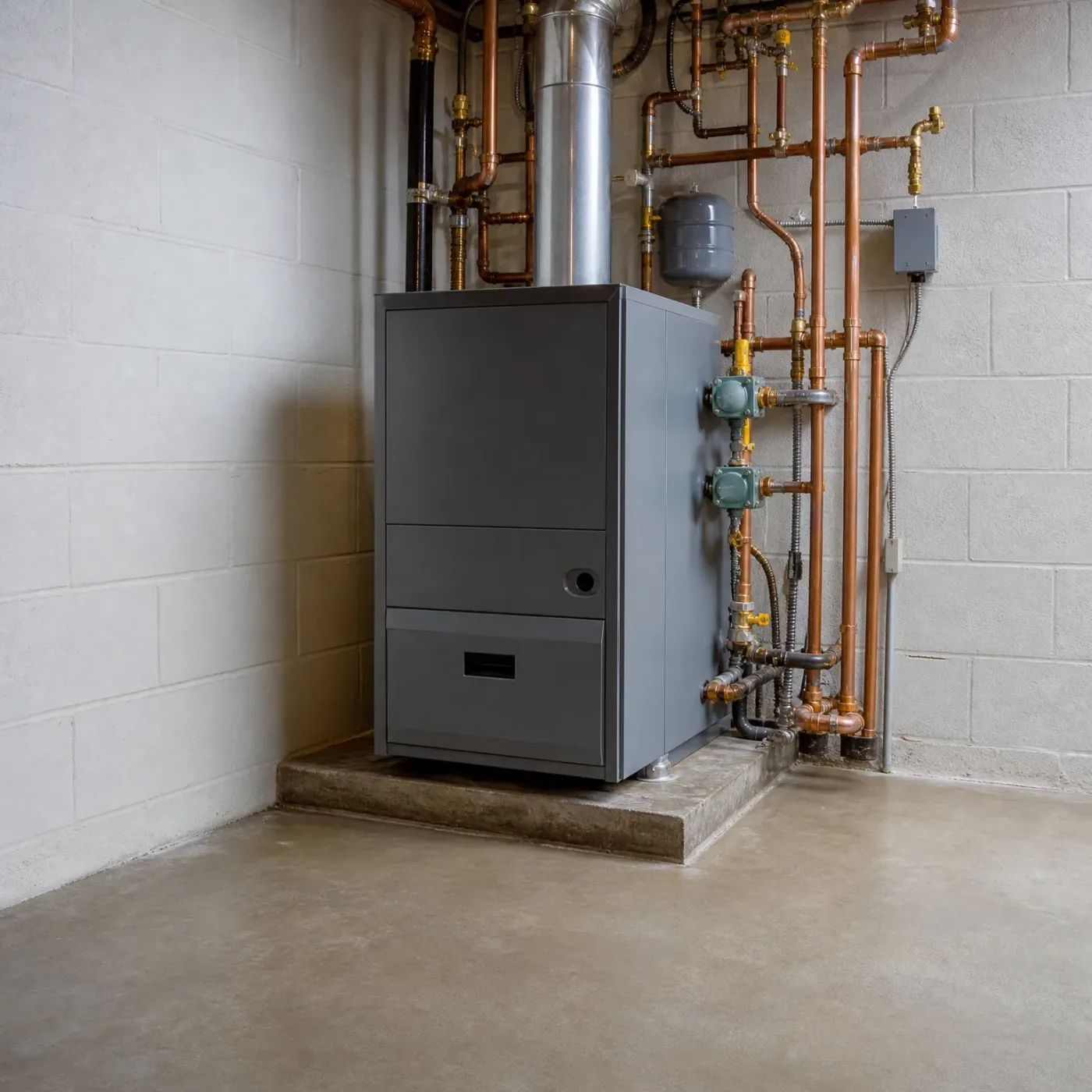
A gray boiler unit on a concrete pad in a basement corner, connected to copper piping, valves and a metal flue against painted concrete block walls.

A dry, quiet unit

A boiler that's working right stays dry. The pipes and fittings beside it stay tight, the expansion tank holds its charge, and the floor underneath stays clean. No puddles, no rust trails down the side, no mineral crust on the valve body.
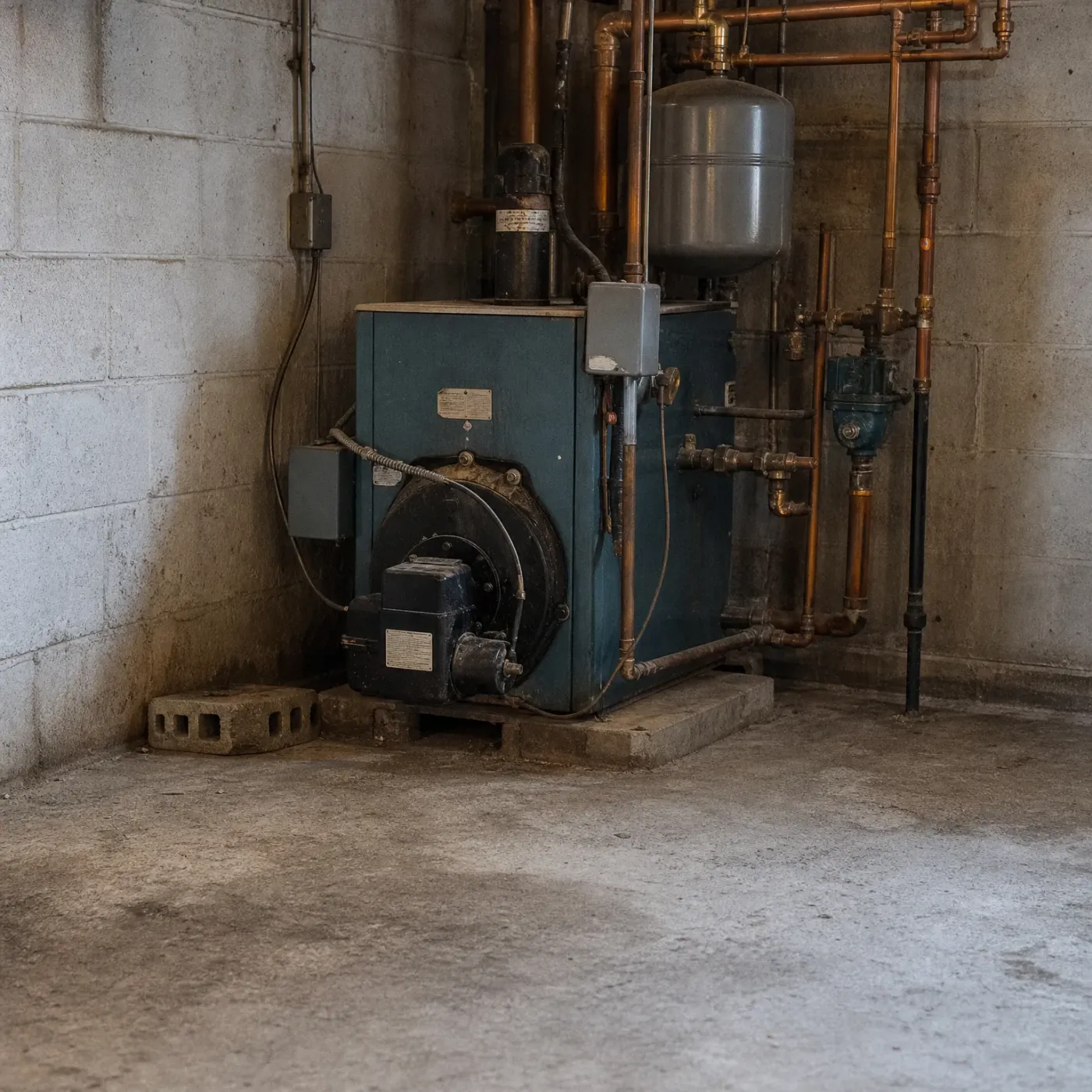
A blue oil-fired boiler with a burner unit sits on a concrete pad in a basement corner, with copper piping, valves and a gray expansion tank overhead against concrete block walls.

Water where it shouldn't be

Water pooling at the base, a rust streak running down the tank, or a crusty buildup around a fitting all mean something has let go. Left alone, that drip can reach the gas control or the wiring below it.

Leak Now or Keep Watching

Call for repair now

  • Water pooling under the boiler or dripping from a fitting means something has already failed and won't seal itself back up.
  • A pressure relief valve that keeps dripping can mean the expansion tank has lost its charge or the system pressure is set too high.
  • Rust forming around the base or down the side of the tank points to a leak that has been going on for a while, not one that just started.
  • Left alone, a small leak around a fitting can work its way into the electronic ignition or controls and take out parts that were fine.
  • A boiler that's lost enough water will struggle to hold pressure, and that shows up as weak heat or short cycling before it shows up as a puddle.
  • Gas and water close by means a leak is not something to wait out, especially with how much power costs here if the system has to work harder to compensate.

Watch and wait

  • A little condensation on the outside of the pipes during a cold snap can look like a leak and clear up on its own once the room warms.
  • If the floor is dry and the pressure gauge holds steady day to day, there's nothing urgent happening yet.
  • Some high-efficiency boilers produce condensate as part of normal operation, and that drains out through its own line, not from a fitting or the tank.
  • A valve that let go once during a cold morning and hasn't dripped since may have just been relieving a brief pressure spike.
  • Checking the gauge and the floor underneath every so often costs nothing and catches a real leak before it gets worse.
  • Warm California winters mean the boiler isn't running nonstop, so a system with no other leaks has more time between cycles to show you if something's wrong.
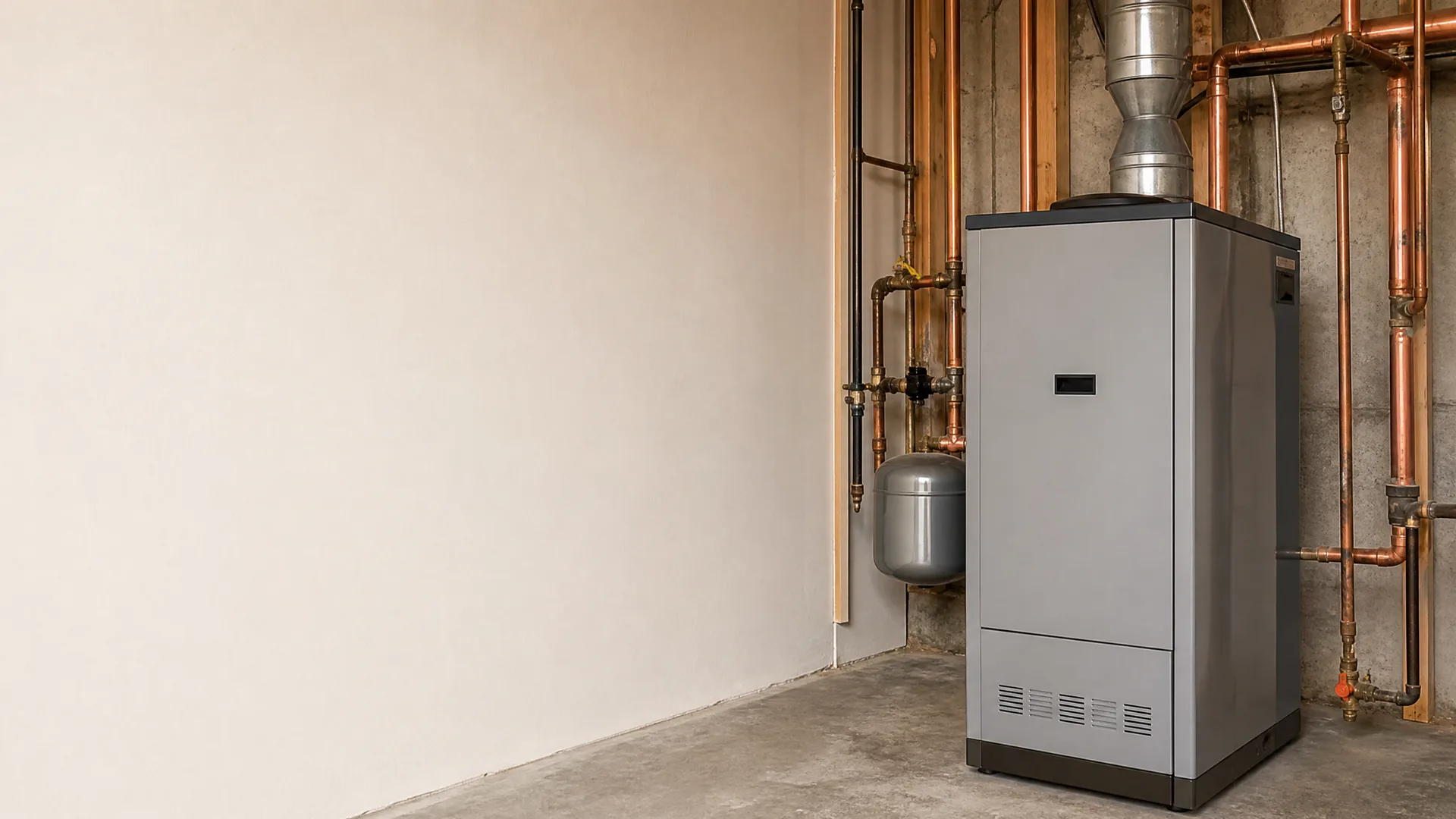
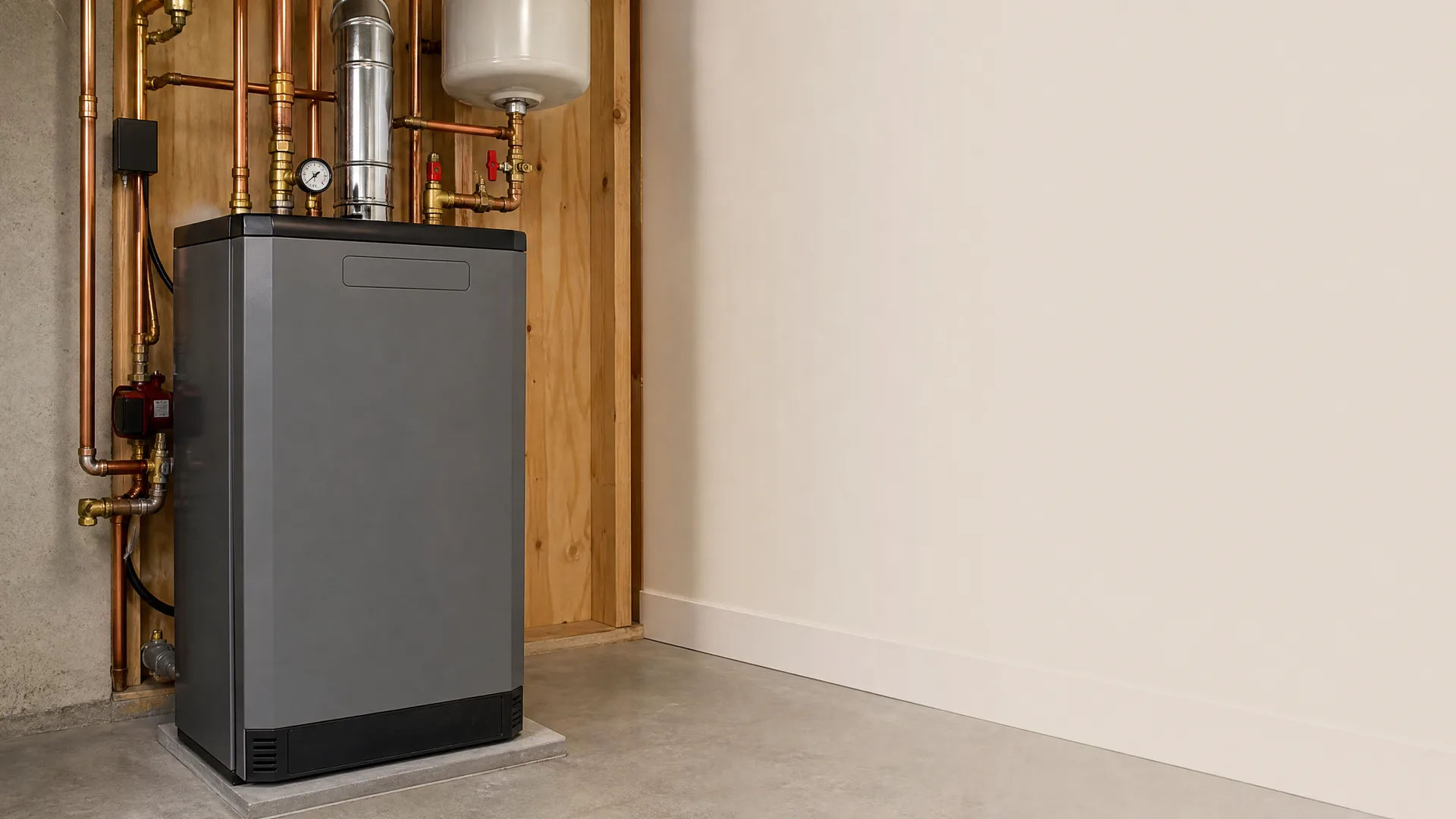
A dark grey floor-standing boiler on a concrete floor in front of a plywood wall, with copper pipes, valves, a pressure gauge, a flue pipe and a white expansion tank above it, beside a plain light-coloured wall.

Why the valve opens at all

The pressure relief valve sits there to protect the tank from building up more pressure than it can hold. Gas-fired boilers heat water in a closed loop, and as that water heats, it expands. If the expansion tank isn't absorbing that extra volume the way it should, pressure climbs until the valve lets a little out. A valve that drips once in a while did its job. One that won't stop means the tank behind it isn't doing its part anymore.

A gray boiler unit with a metal flue pipe stands in a basement corner, surrounded by copper piping and an expansion tank against a plain light wall and concrete floor.

Why a small drip spreads fast

A boiler sits low and close to the floor, often on a concrete pad or near the wall studs, so water from even a small leak doesn't stay contained. It runs along the base, soaks into whatever is underneath, and can reach wiring or a gas line nearby before anyone notices. Catching the drip at the fitting or valve before it spreads keeps a repair a repair, instead of a bigger job involving the floor or the parts around it.

What's that water doing on the floor by your boiler?

Look for a damp patch on the floor, a rust-colored trail down the side of the tank, or a steady drip from one of the fittings. Sometimes it shows up as a hiss or a slow tick of water hitting the floor instead of anything you can see right away. A little white or green crust around a valve or joint is mineral buildup from water that's been escaping slowly for a while. None of this fixes itself. Left alone, the leak keeps feeding that rust spot, and the water finds its way into the floor or the wall behind the boiler, which costs you a lot more to put right than the leak itself.

A smiling man in a gray long-sleeved shirt stands in a kitchen looking to the side, with open shelves of dishes, a white mug on the counter, a potted plant, and a view through a doorway into a living room.
A smiling bearded man in a green sweater sits at a white marble kitchen island with a mug, potted plant and bowl of fruit, in a bright white interior with open shelving and an arched doorway.
A smiling man with dark curly hair and a beard, wearing a dark green knit sweater, stands at a white marble kitchen counter with a dark blue mug, with open shelving, pendant lights and a houseplant behind him.
A smiling man in a green ribbed sweater stands behind a wooden table holding a ceramic mug of coffee in a kitchen with white subway tile, shelves of potted plants, and a bowl of fruit.

Hand off the boiler problem

Your request goes to one pro, not a list of companies.

No charge to send it. You decide if you hire them.

The leak you can watch for now

A small drip at a fitting or a damp ring under the valve is worth a look before it spreads. You can wipe the spot dry, check it again in a day, and see if it comes back. Catching it here means the fix is usually a tightened fitting or a new gasket, not a gutted system. Gas boilers in California run most of the year, so a small leak left alone has months to work on the metal around it before anyone notices.

The leak that won't wait

Water actively pooling on the floor, a steady drip that keeps coming back after you dry it, or rust streaking down the tank means something has already given way. A cracked heat exchanger or a relief valve that won't reseat doesn't fix itself, and running the boiler while it leaks pushes more water onto wiring and controls nearby. With power costs what they are here, a boiler working harder around a fault is also a boiler costing more to run until someone deals with it.

A smiling man with dark curly hair in a navy t-shirt sits on a gray couch indoors, with a large-leafed plant and a window in the background.
A bearded man in a plaid flannel shirt stands in a kitchen looking out a window toward snow-covered shrubs, with a steaming mug on the windowsill and potted plants on a shelf behind him.

A fitting that's just weeping

A damp spot that reappears after you wipe it dry is worth watching closely, but it may still be a simple tightening job if you catch it early.

Get a licensed local pro

A tank or valve that's failing

Steady dripping, rust trails, or a hissing valve mean a part has already given out, and it needs a licensed contractor to replace it before it gets worse.

Get a licensed local pro

Winter nights average 40°F statewide

Winter nights here average 40°F, mild next to what boilers see in colder states, but your system still runs most nights from December through February. That's more hours for a weak fitting or a tired valve to show a drip before you notice it.

NOAA nClimDiv 1991-2020 county normals weighted by homes

Where this leaves you

  • A boiler leak comes down to one of three places: the pressure relief valve, the heat exchanger, or a loose fitting in the piping.
  • Catching a damp spot early usually means a tightened fitting; waiting until it's steady dripping or rust-stained usually means a part needs replacing.
  • A licensed local contractor who services boilers all winter has seen which of these three fails most often in homes near you.
  • Your request goes to one contractor, not a handful of companies competing for the job, so you're not fielding several calls to sort out.
  • Gas is the common fuel for boilers here, and power costs enough that a drip left alone tends to cost more the longer it runs.
  • Once you send the request, finding someone to look at it stops being on you.

Three places cause a boiler to leak: the pressure relief valve, the heat exchanger, or a fitting that's worked loose. A damp spot you catch early and a steady drip you can't ignore point to different jobs, but both start with the same look under the tank. The valve is the one to suspect first, since it's built to open when pressure climbs too high, and a tank that's lost its charge or a system running hot will keep it dripping until that gets fixed.

None of this needs a guess on your part. A contractor who works on boilers through the winter has already seen most of what causes this in homes around you, and knows whether a particular drip means a fitting needs a wrench or a valve needs replacing. Your request goes to that one contractor, not out to several companies hoping to win the job, so you're not stuck sorting through calls to figure out who actually knows your equipment.

Gas heats most boilers here, and with power priced the way it is in California, a small leak left alone tends to cost more the longer it sits, not less. Winters are mild next to colder states, but the system still runs most nights from December through February, which is a lot of hours for a weak fitting to keep weeping.

Once you send the request, the search is done. Finding the right person to look at it is no longer something you have to manage.

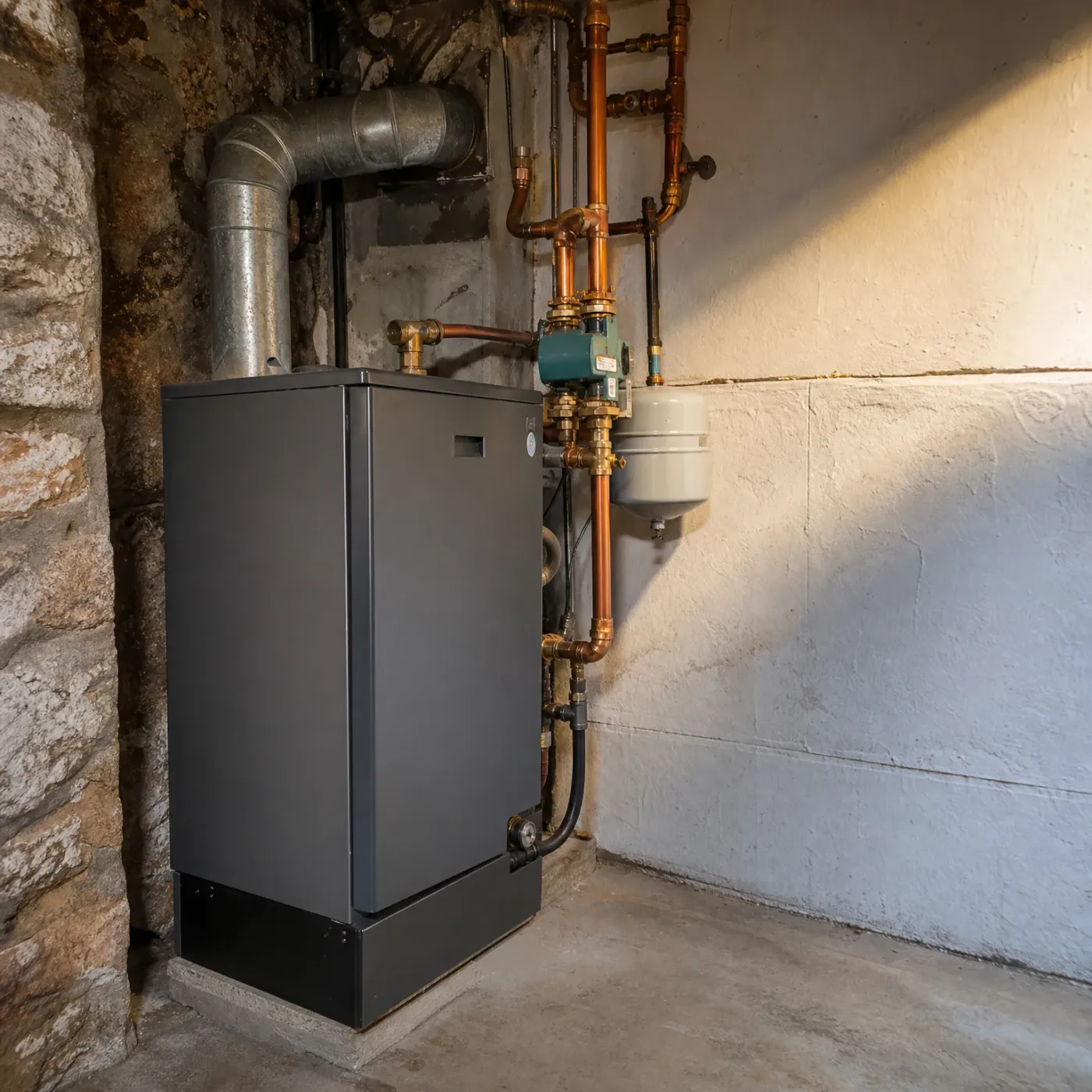
A dark gray boiler unit stands in a basement corner against a stone and painted concrete wall, connected to copper pipes, a circulator pump, an expansion tank, and a galvanized metal flue duct.

One request and it's handed off

Hand off my repair

Only one pro gets your request, so you hear from one company.

You only hire the pro if you want to.