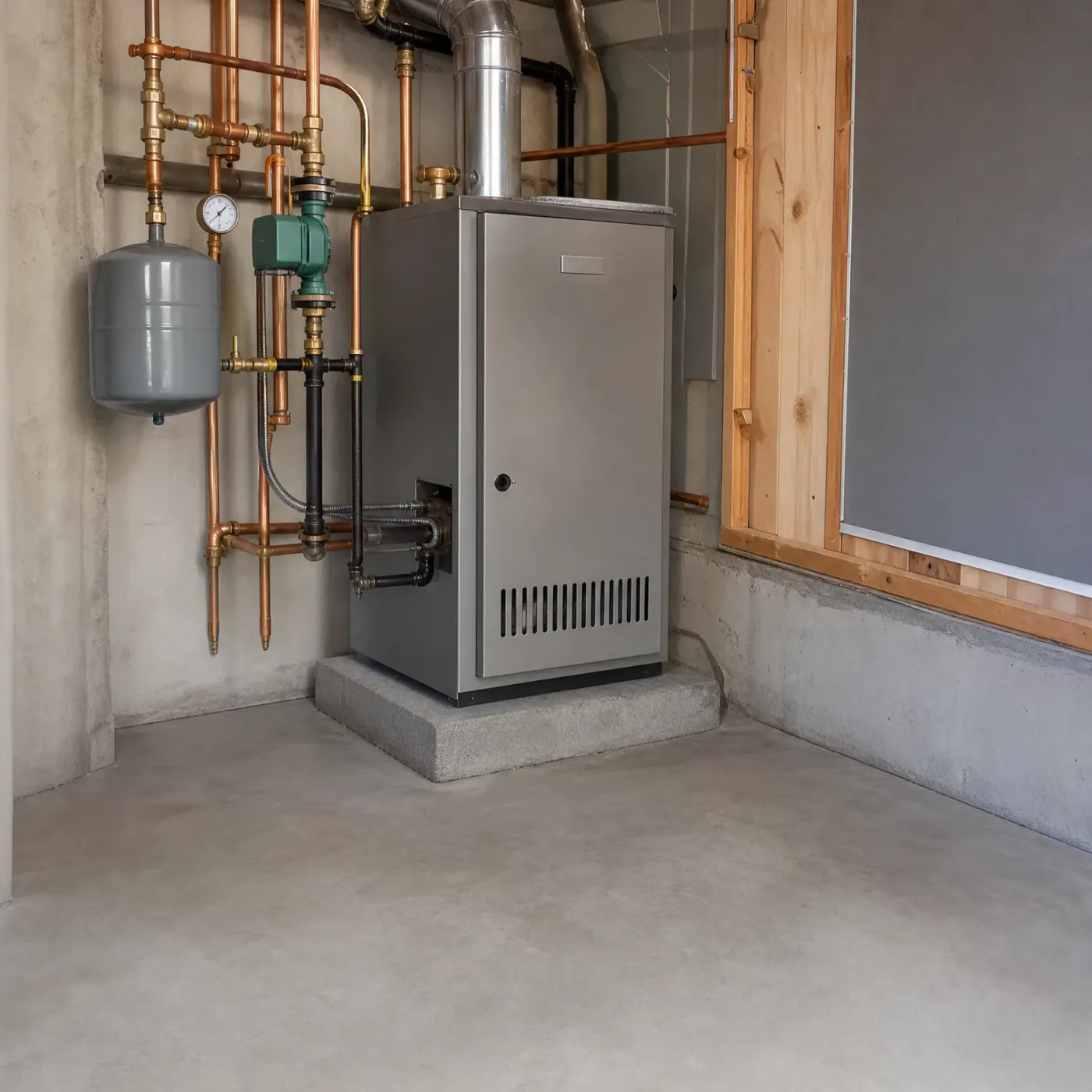
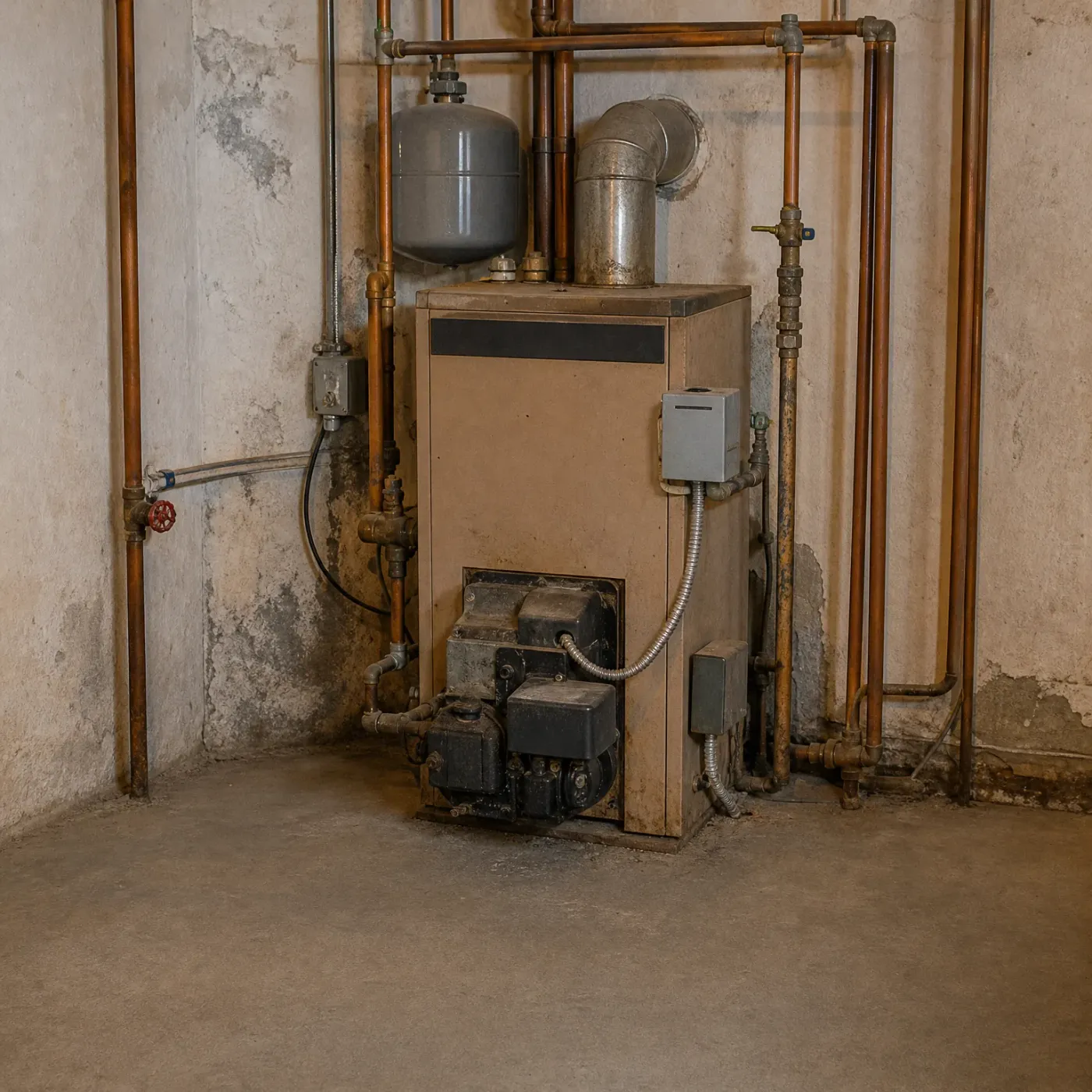
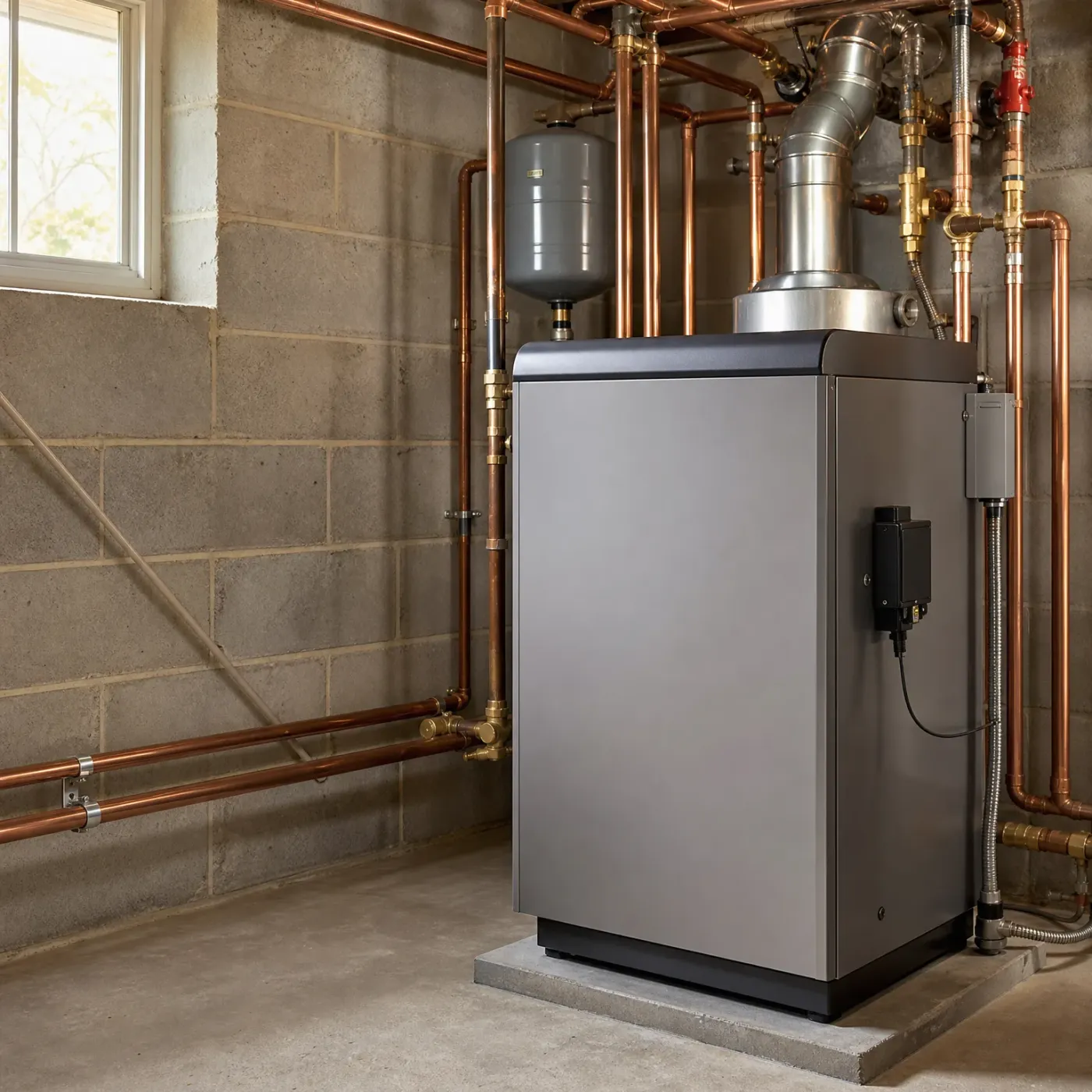
Describe your boiler job, and a local pro who handles it gets in touch.
A boiler that keeps losing pressure usually has a leak somewhere in the system, or a problem at the expansion tank or the pressure relief valve. Sometimes it's a fitting that's weeped for months before anyone noticed. Sometimes it's a valve that's past its working life. Topping off the pressure gauge every week or two is not a fix. It's a sign something needs a real look.
In most California homes the boiler runs the heat and nothing else, since summers here don't ask much of it. That means the system sits unused for long stretches, and a slow leak can go unnoticed for a long time before the pressure drop becomes obvious or the boiler starts shutting itself off.
With power costs here among the highest in the country, a lot of homes run their boiler on gas. That doesn't change where pressure goes when it's lost, but it does mean a tech working on your system needs to know gas boilers specifically, not just heating systems in general.
Finding where the water is actually going, whether it's a visible drip, a hidden pipe, or a part inside the boiler itself, takes someone who opens these units up for a living. A local contractor who services boilers all year, not just in the cold months, has likely already seen the specific valve or fitting that tends to fail on units like yours.
When you request a match through this page, you're connected with one licensed contractor local to your area, not a handful of companies competing for your call. They'll reach out to you directly about what you're seeing with your own boiler, the pressure drop, how often you're refilling it, whether you've noticed water anywhere, and go from there.
Why does my boiler keep losing pressure?
You've topped off the pressure gauge more than once now, and it keeps drifting back down below where it should sit. The heat still works, mostly, but you're starting to wonder if this is something that fixes itself or something that gets worse until a cold morning it doesn't come on at all.
A leak is losing the water, even a small one
Pressure that keeps dropping almost always means water is leaving the system somewhere. It doesn't have to be a burst pipe. A fitting can weep slowly for months, a valve can seep only when the system heats up, or the expansion tank can fail and stop absorbing pressure the way it should. California homes that heat with gas run the boiler hard through the cooler months, and that regular cycling is what finds the weak spot, whether it's a joint that was never quite tight or a relief valve nearing the end of its life. Left alone, it's the kind of problem that tends to show up as no heat on the one morning you need it most.
Pressure holding steady
The gauge sits where it should, usually between 12 and 15 psi when the system is cold. The expansion tank is doing its job, taking on water as it heats without pushing the needle up. No puddles under the fittings, no rust trails down the pipes. Pressure like this means nothing's feeding out of the loop.
Pressure dropping again
Water is leaving the system somewhere, and it has to go one of two places: out through a leak, or into the expansion tank once its bladder has failed. Check the floor around the boiler and the pipe joints above it for damp spots or mineral stains. A relief valve that drips when pressure climbs is often the one losing the water.
A local pro for your boiler repair
Your request goes to one pro, not a list of companies.
Say what's going on with your boiler, and a pro who works on them reaches out.
At 40°F on a winter night, your boiler is cycling on and running long enough to heat the whole house, not just taking the edge off. That steady run time keeps pressure moving through the system, and it's part of why a slow leak shows up faster here than it would in a milder stretch.
NOAA nClimDiv 1991-2020 county normals weighted by homes
1
Water leaks out at a fitting, valve, or circulator seal
2
Lower water volume drops system pressure below normal
3
Expansion tank fails to cushion pressure as water heats
4
Pressure relief valve opens and dumps water from overpressure
A boiler losing pressure has a cause, and it can be found
A boiler that keeps losing pressure is telling you something specific. Water is leaving the system somewhere, through a fitting, a valve, a seal, or the expansion tank isn't cushioning the way it should anymore. The gauge is just reporting what's already happening. Once someone finds where the water is going, the fix is usually straightforward.
A local contractor who works on boilers through the winter has likely seen this exact pattern before, on a system not unlike yours. Getting matched with one means someone who knows what tends to fail in a boiler of this age and setup, not a crew working from a checklist. You'll hear from that one contractor directly, so you're dealing with a single call back, not fielding offers from several companies at once while you're trying to keep the house warm.
Boiler Repair
Get the right pro for your boiler
Step 1 of 3: Equipment
Tell a local repair pro what your boiler is doing.
Once you send the form, finding a pro is off your list.
After you send the request, you're done searching.
Answer a few questions instead of calling shop after shop.
Describe your boiler job once, to one pro.
Only one pro gets your request, so you hear from one company.