
Why your radiators won't heat up in California

Tell a local repair pro what your boiler is doing.

Find a pro near me

Why won't my radiators heat up?

You turn up the thermostat and wait, but the radiators stay cold, or only one or two rooms ever get warm while the rest don't. In a gas boiler system like most homes here have, that usually isn't the thermostat's fault at all. Before you assume the whole boiler is out, it helps to know what's actually keeping the heat from reaching the radiators.

Trapped air or a circulator problem is usually why

Radiators that stay cold usually come down to one of two things: air trapped in the lines, or the circulator pump not moving hot water through them. Air pockets sit at the top of a radiator and block water from filling it, which is why bleeding one radiator can fix it while another down the hall stays cold. If every radiator is cold at once, the circulator pump or a failed zone valve is more likely the cause, since that's what pushes heated water out from the boiler in the first place. Either way, the boiler itself may be firing just fine. The problem is between the boiler and the radiator, not inside the burner.

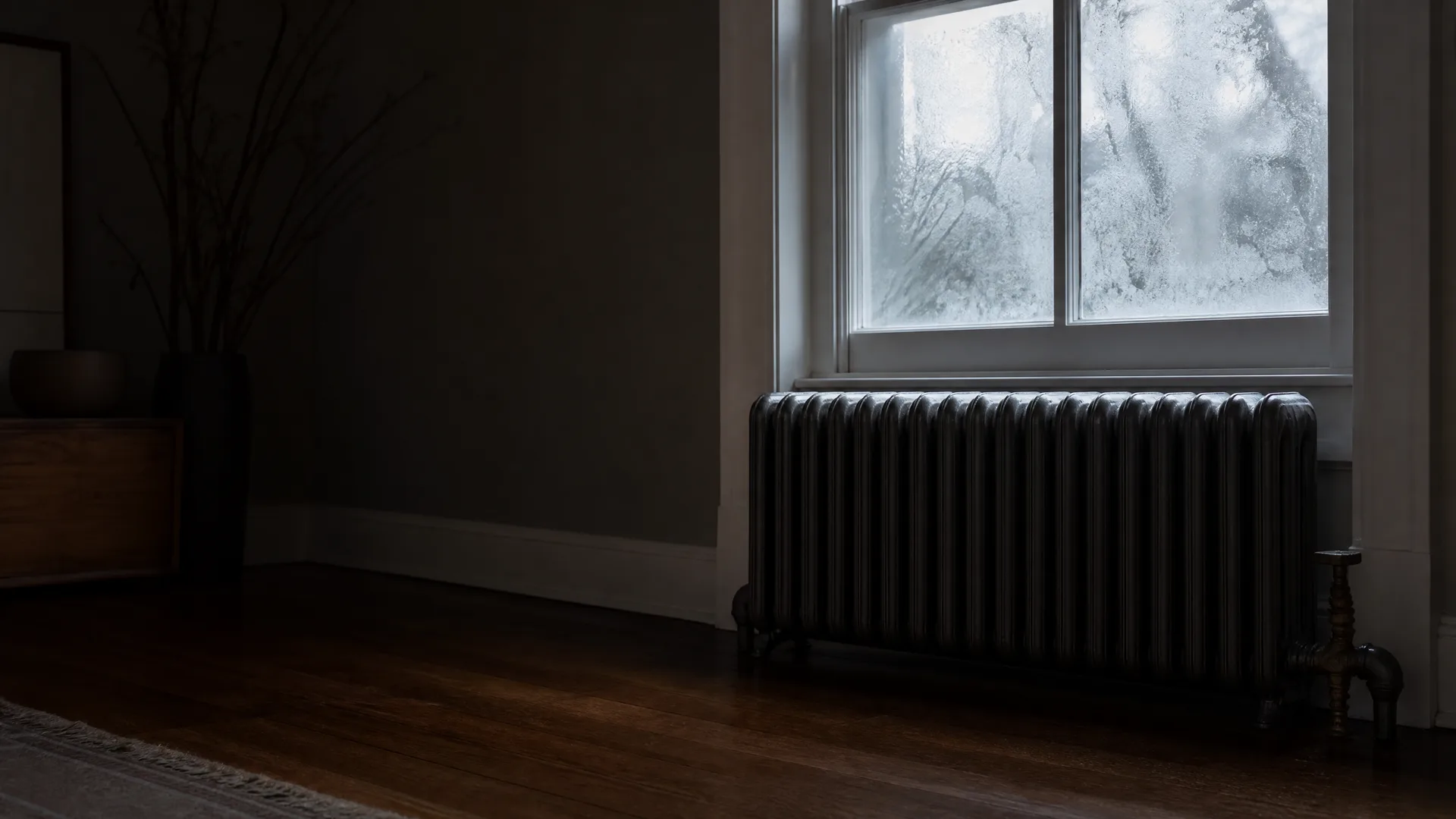
A cast-iron column radiator stands beneath a frosted window in a dim room with dark walls, a wood floor, and a vase of bare branches on a low cabinet at left.

You wake up before the kids and go straight to the thermostat, bumping it up five degrees like you did an hour ago. The glass over the window is iced on the inside, a thin frost that wasn't there last January. You put your palm on the radiator under it anyway, out of habit, and it's cold at the bottom, barely warm at the top. Down the hall the bedroom radiator ticks and hisses the way it's supposed to. You stand there a minute in your coat, listening to the boiler run somewhere below you, paying for heat that isn't reaching this room.

Bleed the Radiator or Call Someone

Bleed It Yourself

  • A radiator key opens the small valve at the top so trapped air can hiss out until water runs steady.
  • This fixes cold-at-the-top, warm-at-the-bottom radiators, which usually means air, not a failed part.
  • It costs nothing but a few minutes and a rag for the drip once the air clears.
  • If every radiator in the house is cold, bleeding won't help, since that points to the boiler itself or the pump moving water through the system.
  • You'll need to check each radiator separately, since air can collect in one room's unit and not another's.

Call for Repair

  • A stuck zone valve, a failing circulator pump, or low system pressure can leave radiators cold no matter how much air you bleed out.
  • A contractor can pressure test the system and tell you whether the boiler is firing properly and pushing water where it needs to go.
  • Skipping this gets harder to justify once a few rooms stay cold through a cold night here, not just chilly in the morning.
  • A licensed contractor carries the gauges and parts to diagnose a pump or valve problem that bleeding a radiator can't touch.
  • Getting matched means you stop calling around and re-explaining the same cold radiator story to three different companies.
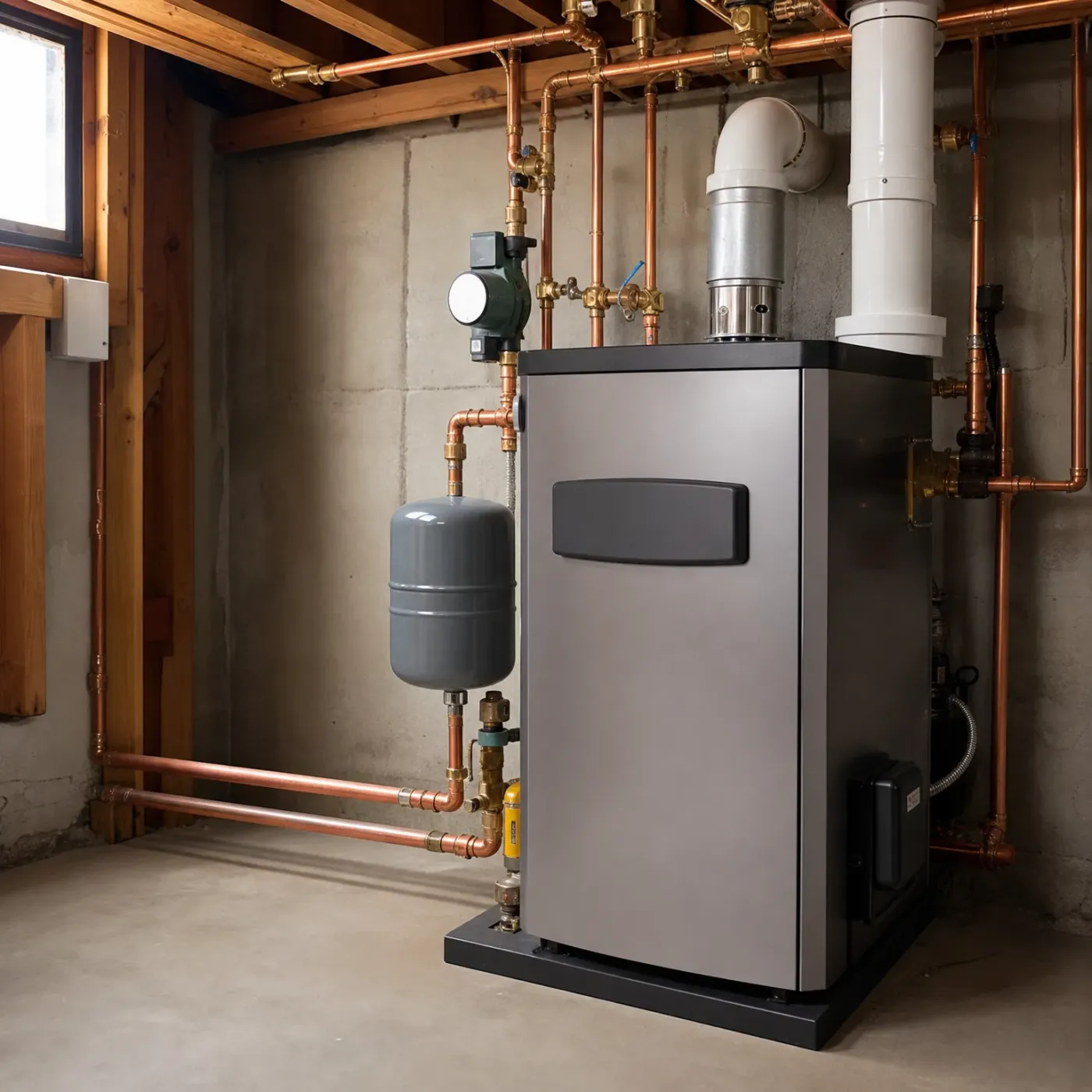
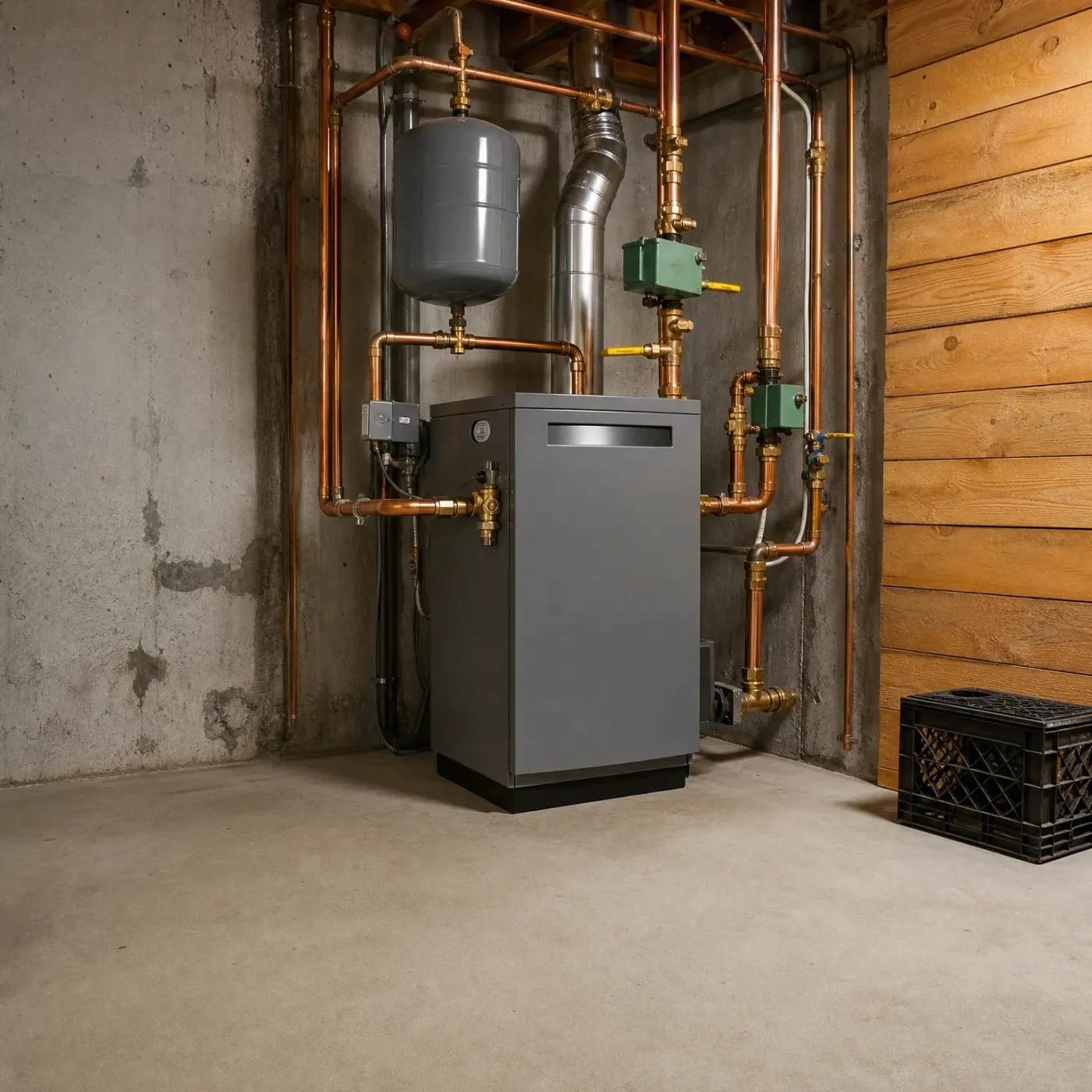
A gray boiler unit in a basement corner with copper piping, brass valves, a gray expansion tank, a metal flue duct, concrete walls and a wood-paneled wall, with a black plastic crate on the floor at right.

Running as it should

Every radiator in the house gets warm within the same stretch of time, top to bottom, no clanking in the pipes. The zone valves open when called and the circulators move water through the loop without a fight. Pressure holds steady on the gauge, and the boiler cycles on and off instead of running straight through the evening.
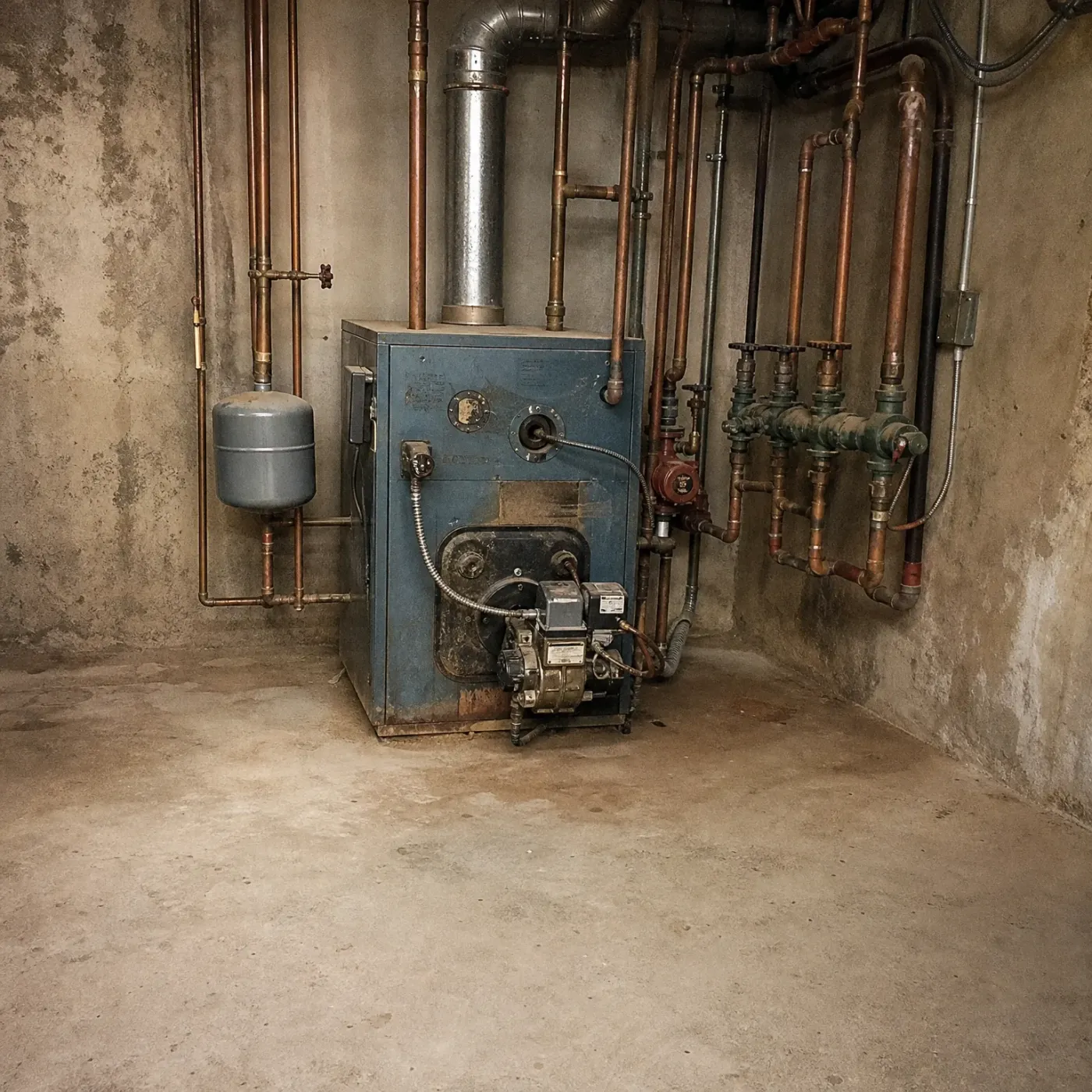

An older blue boiler with a burner unit stands in a concrete basement corner, connected to copper and steel piping, valves and a gray expansion tank on the wall.

Losing the fight

One zone valve has seized, so half the radiators stay cold no matter what the thermostat says. The expansion tank has waterlogged and the pressure climbs past where it should sit. A circulator hums but doesn't turn, and water finds the path of least resistance instead of the one the piping was built for.

A smiling woman with dark shoulder-length hair in a cream V-neck sweater sits at a marble counter with a glass of red wine, with a kitchen and softly lit living room behind her.
A woman in a dark green sweater laughs while seated at a marble kitchen island with a glass of red wine, with open shelving, cabinets and a living room visible behind her.
A woman with long dark hair in a cream knit sweater laughs while looking off to the side, seated at a counter with a glass of red wine, in a dimly lit living room with a sofa, lamp, framed pictures and houseplant behind her.
A smiling woman with long dark hair in a beige sweater sits at a marble kitchen counter with a glass of red wine, with a dimly lit living room behind her.
A gray boiler on a black base in a basement with concrete walls, connected to copper piping, a circulator pump, a gray expansion tank, and white and metal flue vent pipes.

A boiler pro near you

Describe what your boiler is doing once, in one form.

Say what's going on with your boiler, and a pro who works on them reaches out.

Get my match

Asking costs nothing, and the choice to hire stays yours.

A woman in a cream cardigan and jeans stands with one hand raised facing an open front door of a gray horizontal-siding house, with a black lantern wall light, a potted shrub with yellow flowers, and a stone-faced porch column.

What's actually stopping the water from circulating

A boiler pushes hot water out through the supply pipes and expects it back through the return pipes, and a circulator pump keeps that loop moving. If a radiator is cold while the pipe feeding it is hot, the water is reaching the valve and stopping there. The usual reason is the valve itself, either the manual valve at the base of the radiator or the thermostatic head on top, stuck from sitting open or shut for years without being touched. Sediment building up inside an older radiator can block the same path from the inside, which looks the same from where you're standing but isn't the same fix.

A circulator pump that's failing shows up differently. Instead of one cold radiator, you get a whole zone that never warms, because nothing is moving through that loop at all. Telling a stuck valve from a dead pump from a clogged line means opening things up, and most homeowners don't have the valve key or the gauge to check pump pressure against boiler pressure. Answer a few questions about what you're seeing and a contractor who works on boiler systems can take it from there.

Interior corner of a room with a window and sheer curtain at left, a gray upholstered sofa with a cushion at right, and a round wooden table holding stacked books and a round vase with an olive branch.
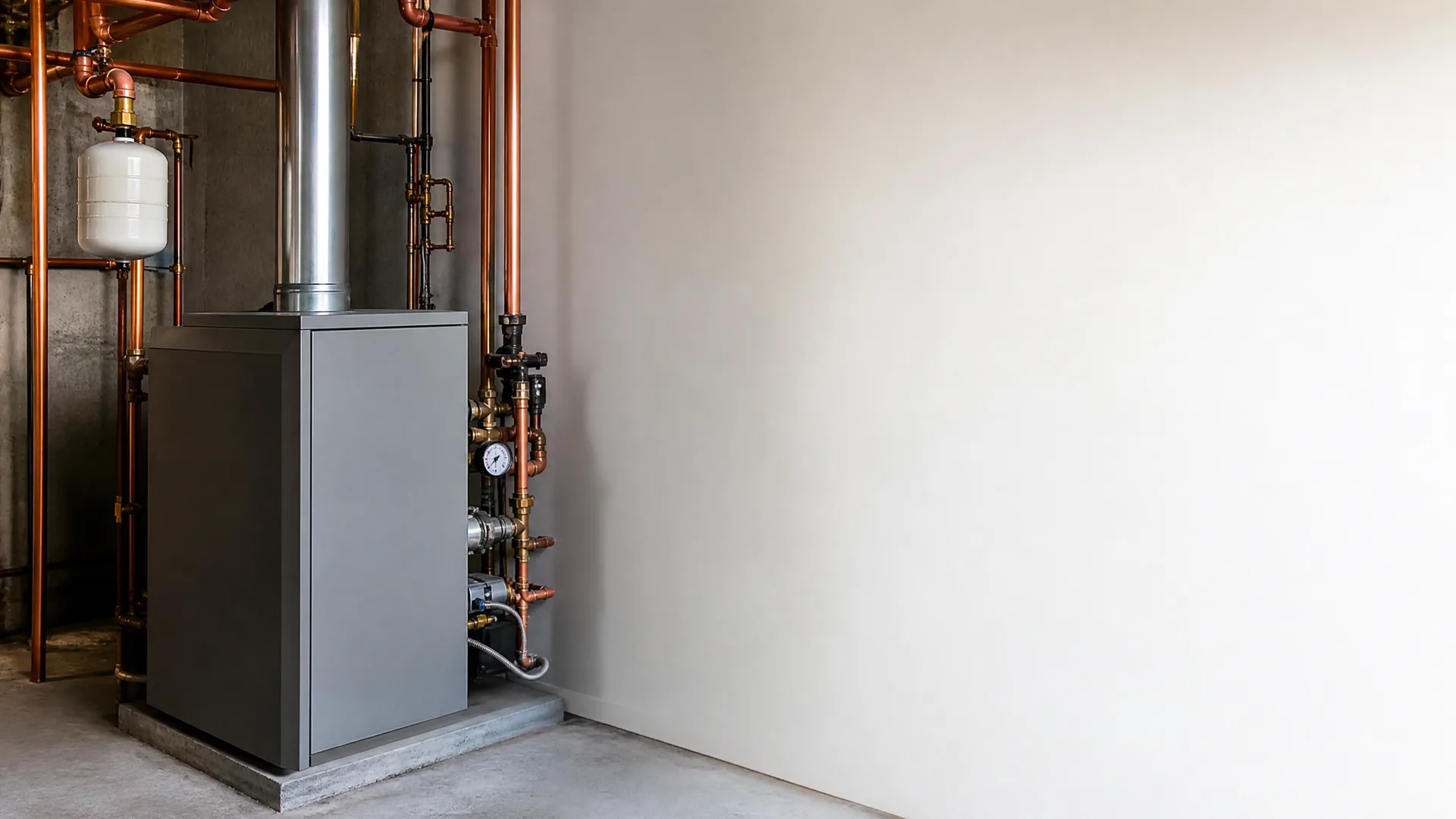
A grey floor-standing boiler with a metal flue and copper pipework, valves and a pressure gauge stands in the corner of a room with plain light walls and a concrete floor.

Why trapped air builds up

Water in a boiler loop holds dissolved air, and every time the system heats and cools, some of that air works loose and rises to the highest point it can find, usually the top of a radiator. Once enough collects there, it blocks water from filling that space, so the top stays cold while the bottom, still full of water, stays warm. A system that's been run hard through a cold snap will often need bleeding more than once in the same week.

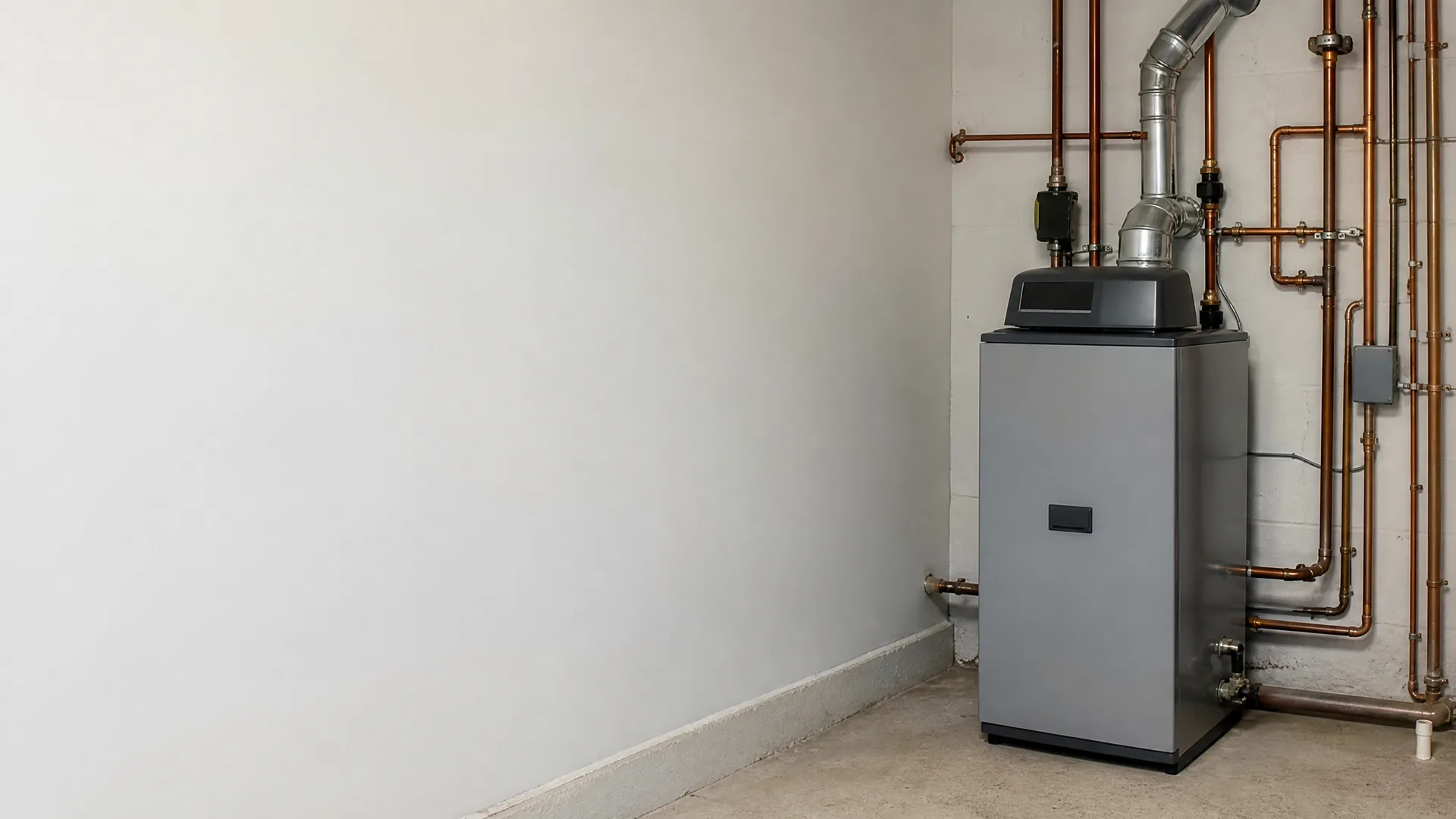
A gray floor-standing boiler with a metal flue pipe stands in the corner of a plain painted basement room, connected to copper pipes running along the wall.

What sludge does over years

Iron radiators and steel pipes corrode slowly from the inside, and the byproduct is a black sludge that settles in the lowest points of the loop. It collects in radiators first, often the ones furthest from the boiler, and narrows the path water has to take through them. A radiator that stays lukewarm everywhere, not just cold at the top, is more often sludge than air, and bleeding won't clear it.

Winter nights average 40°F statewide

At a 40°F overnight low, your boiler is cycling on for hours most nights, not just at the coldest stretch of the year. A cold radiator in a room you use every evening isn't a minor annoyance at that pace. Trapped air or a stuck valve just costs you more, night after night, until it's fixed.

NOAA nClimDiv 1991-2020 county normals weighted by homes

Where Your Cold Radiators Stand

  • Cold radiators almost always trace back to trapped air, a stuck valve, or a circulator that isn't moving water, not the thermostat.
  • Bleeding a radiator fixes the warm-at-the-bottom, cold-at-the-top pattern in a few minutes and costs nothing but your time.
  • A radiator that's cold end to end while its pipe runs hot points to a closed or seized valve rather than an air pocket.
  • Pressure that won't hold or a circulator that stays silent when the thermostat calls for heat is a job for a licensed contractor.
  • At a 40°F overnight low, a boiler already runs for hours most nights, so a cold radiator costs you more every one of those cycles.
  • Once you know whether it's air, a valve, or circulation, you know which fix you're actually looking for.

A radiator that won't heat up is telling you something specific, if you know how to read it. Warm at the bottom and cold at the top means air got into the loop and is sitting where the heat should be. Cold from end to end while the pipe feeding it is hot means the valve isn't opening, whatever the thermostat is asking for. No warmth anywhere in the house, or pressure that keeps dropping no matter how many times you top it off, points past any one radiator and into the boiler's circulator or the loop itself. The first one is yours to fix with a radiator key and a few minutes some evening. The other two aren't, and trying to force them usually just hides the real problem a little longer. None of this is about the thermostat, no matter how many degrees you've added to it this week. It's about whether water and heat can actually get to where you're sitting. A boiler running for hours on a 40°F night doesn't pause to sort that out on its own, so the gap between the room you're in and the one with the warm radiator just holds steady, night after night. Knowing which of the three you're dealing with doesn't fix it, but it tells you what kind of fix you're looking for, and what you can rule out before anyone sets foot in your house. That's the difference between calling around describing symptoms and calling once with an answer.

A smiling bearded man in a navy sweater sits at a candlelit dinner table with a glass of red wine, a bowl of salad, and plates of food in the foreground.
A woman with dark hair in a bun reclines on a sofa with her eyes closed, wrapped in a cream fleece blanket, a closed blue hardcover book resting in front of her, with a lit lamp and a vase of dried flowers in the background.

Boiler Repair

A local pro for your boiler repair

Answer a few questions instead of calling shop after shop.

A black-framed smartphone standing upright against a plain white background, its screen filled with solid green.
Step 1 of 3: Equipment